
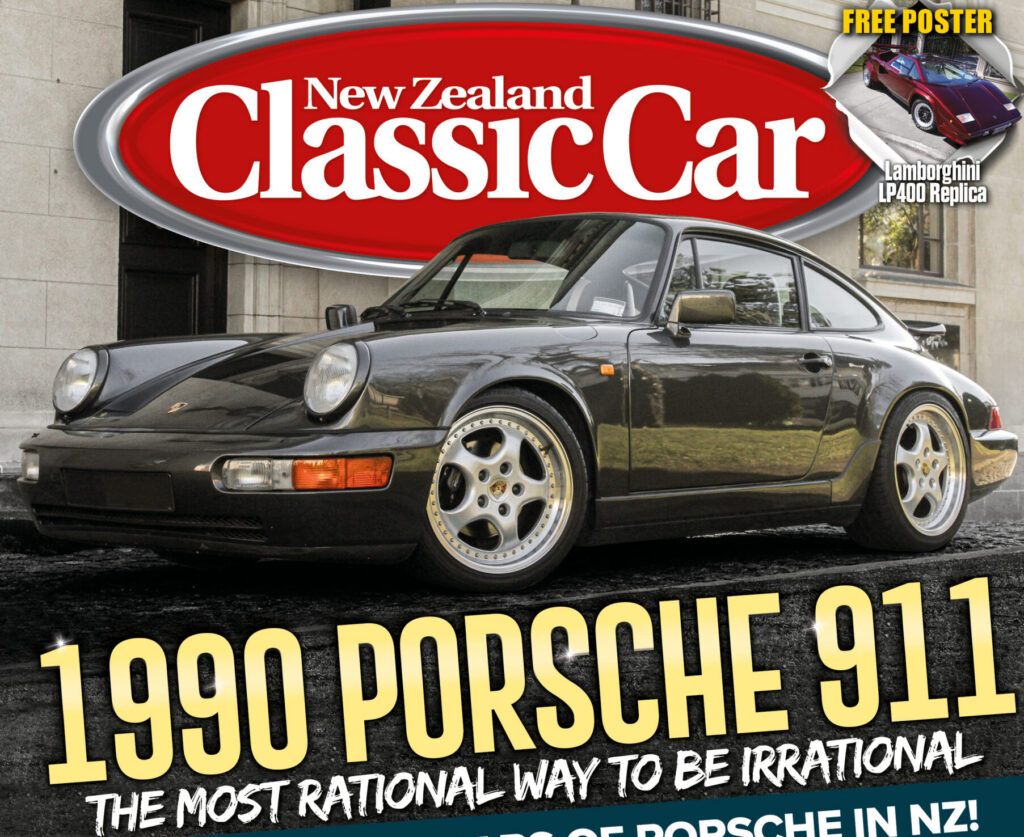
NZ Classic Car magazine, November/December 2026 issue 408, on sale now
Star status for classic Porsche
A long search ends: finding the right car
Unveiled at the Frankfurt Motor Show in 1963, the Porsche 911 heralded an iconic lineage of sports cars, known for their exceptional performance, remarkable racing reliability, and adaptability, second to none.
New Zealand Classic Car, in conjunction with Star Insure, recently conducted a photo competition to find 13 suitably impressive classics to grace the pages of the magazine’s 2027 calendar. A flood of entries showed that Kiwis recognise eye-catching designs and restorations. Many are handy with a camera, too, and have entered some outstanding results.
The choice was not straightforward, with multiple stunning entries, and Geoff Long’s immaculate 1990 Porsche 911 (964 Factory designation) took top honours. Fortunately, Geoff had Ethan Hanlon handy to take the accompanying photos while working in his office.
“I’ve got a young employee who is doing work experience in my office at the moment, and he’s a very avid photographer. So, I said, I’ll buy you breakfast and then why don’t we go and take some photos. He found the right spot, and he spent over an hour photographing.”
Originally sold new in Japan, hence the right-hand drive, the Porsche was resident there for four years before being exported to New Zealand, as Geoff recalls.
“I bought it two-and-a-half years ago, but I looked for it for over two years, because it’s just the colour scheme, interior and exterior I was after. The service file that came with it is extensive; I mean, it’s been beautifully looked after, which is what I wanted to continue, as it does get driven. It doesn’t sit in the garage.”
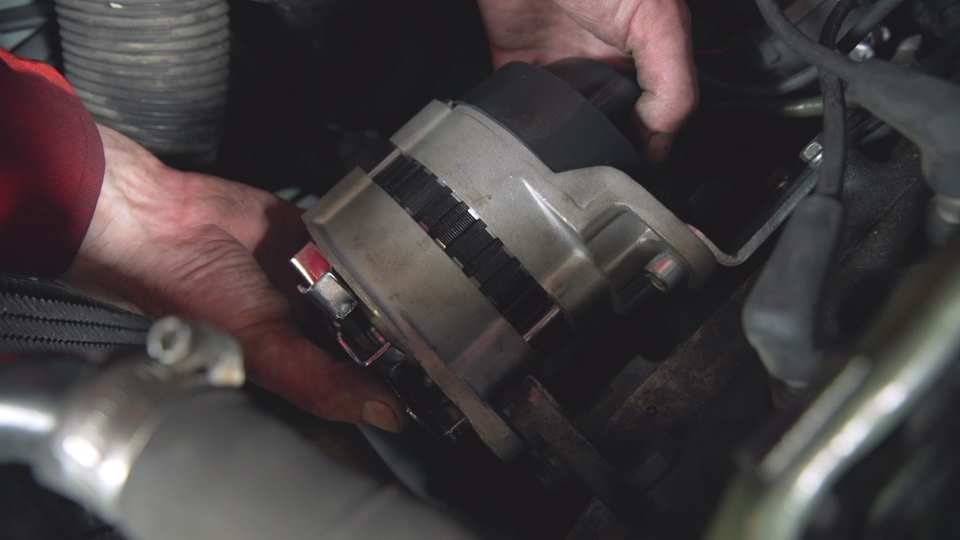
How to switch to an alternator
Car electrics can be daunting, but upgrading from a generator to an alternator need not be complicated if you know what pitfalls to avoid.
The challenges you may face when converting a 12-volt generating system to an alternator are:
• Finding brackets to mount the alternator to your engine
• Determining the wiring you want to use for your particular set-up
• Deciding whether you want to use an ammeter, an idiot light, or a voltmeter to monitor your classic’s charging system.
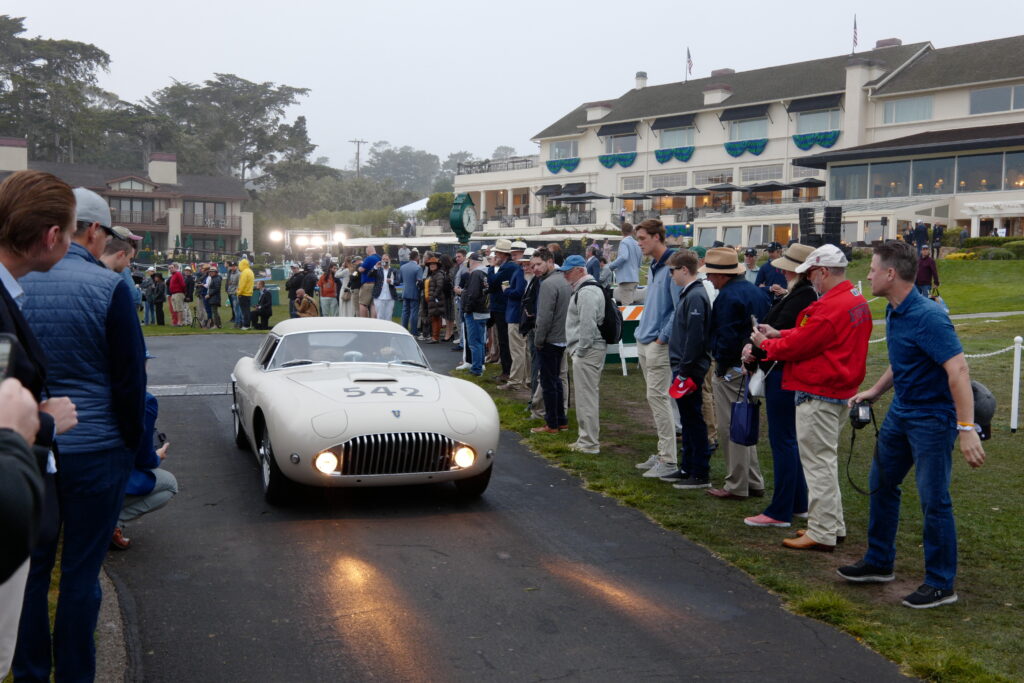
Classics on the green
Many pretenders vie for the title, but the Pebble Beach Concours d’Elegance gets my vote as the biggest thing since sliced bread.
The 71st edition of the world’s pre-eminent and best-known concours event featured 28 classes, judged by a 180-strong jury, which also chose the recipients of 26 special awards.
The size of the event, the number of visitors, and, most mind-numbingly, the sheer number of amazing cars, is almost overwhelming. There are so many quality cars to gaze upon, and so many people gazing at those cars, that it is almost impossible to cover everything.
Notable among the many attractions were the centenary celebrations of the 24 Hours of Le Mans, an elegant Talbot-Lago Grand Sport, Hermann Graber’s Swiss-bodied cabriolets and coupés, the jewels of Otto Vu Italian V8s, early Alfa Romeos, Lincoln and its centenary, and cars with unorthodox propulsion systems.
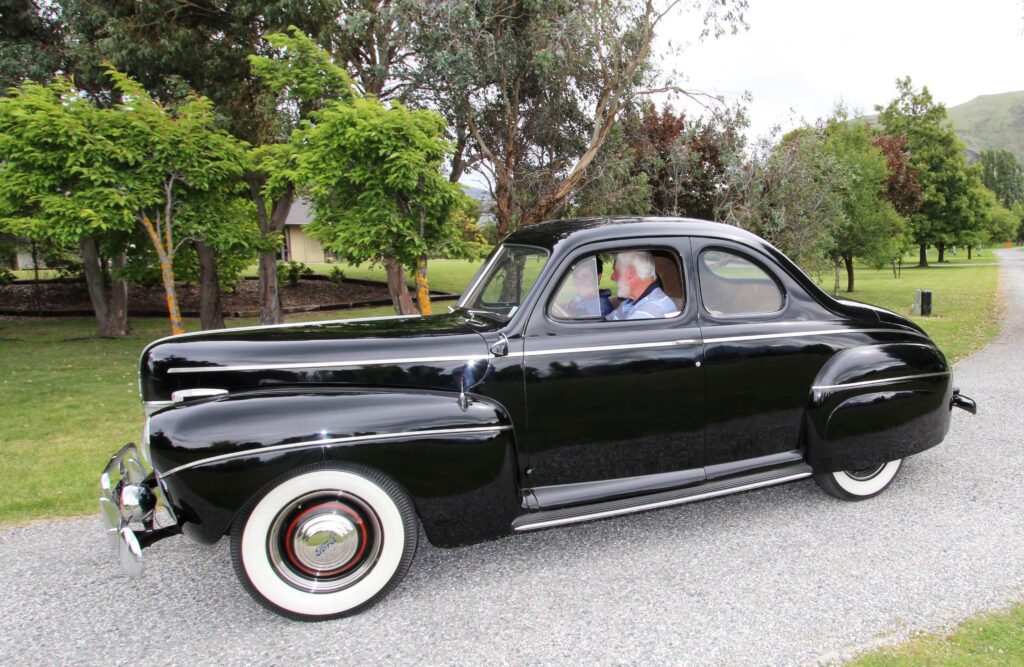
The originals – the Ledgerwood Collection
Thanks to Central Otago’s dry climate, it’s no surprise to find that Wanaka couple Jim and Daphne Ledgerwood are steadily developing an incredible collection of amazing coupes. ‘The Originals’ they have are as per factory new condition, and their aim is to keep them for everyone to see how it was done back in the day—pure nostalgia.
An occasional email from Jim usually reveals another gleaming addition. The collectors also have an impressive display of American pickups. It’s our gain and US enthusiasts’ loss, as car agent’s adverts proclaim, “Sorry you missed out. Gone to New Zealand!” Some of Jim and Daphne’s cars are almost part of the family, hence their nicknames.
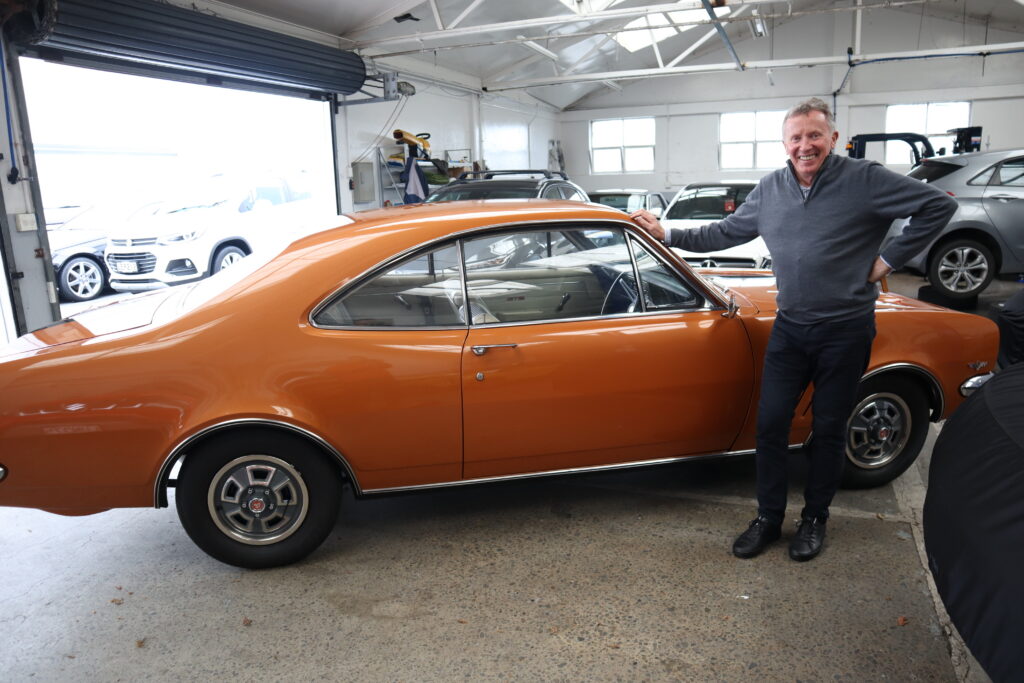
Bronze treasure unearthed
The car was put away in favour of something more practical, and when his father was unable to drive any more, Matt’s friend asked him to come and take a look at his dad’s old Holden. It turned out this was one of those phone calls that leads to that feeling of pure joy in the classic car world — the ‘barn find’ that turns out to be even better than expected. The HT Monaro had been put to bed some years before and had not seen the light of day since. Layers of dust and boxes of junk littered her undercarriage and bodywork and access points all around.
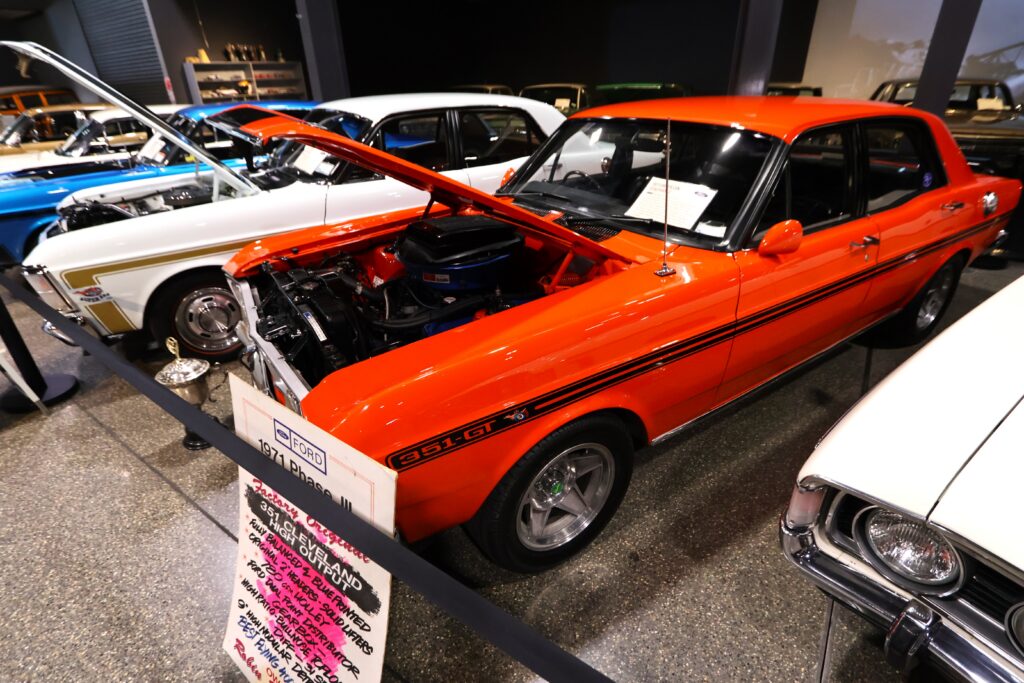
Ford Falcon display: Bill Richardson Transport World
Ford Falcon enthusiasts from around Southland have made their pride and joy, Australian Ford Falcons, available for the extensive display now on at Bill Richardson Transport World in Invercargill.
Avid local Ford Falcon GT collectors, Roger and Diane Whyte have made a number of their cars available for display, while a
real rarity is Robin MacDonald’s factory original 1971 Ford Falcon Phase II GTHO.
From the very first to the very last Ford Falcon, this is a great opportunity to view these Australian icons under one roof.
The exhibition is on until early June. Don’t miss it!

NZ Classic Car
(opens in a new tab)New Zealand's leading classic car magazine. From everyday classics to collectable modern classics

Classics on the green | New Zealand Classic Car
classiccar.co.nz
James Nicholls attends the 71st edition of the world’s pre-eminent, best-known concours event, the Pebble Beach Concours d’Elegance. It featured 28 classes and was judged by a 180-strong jury

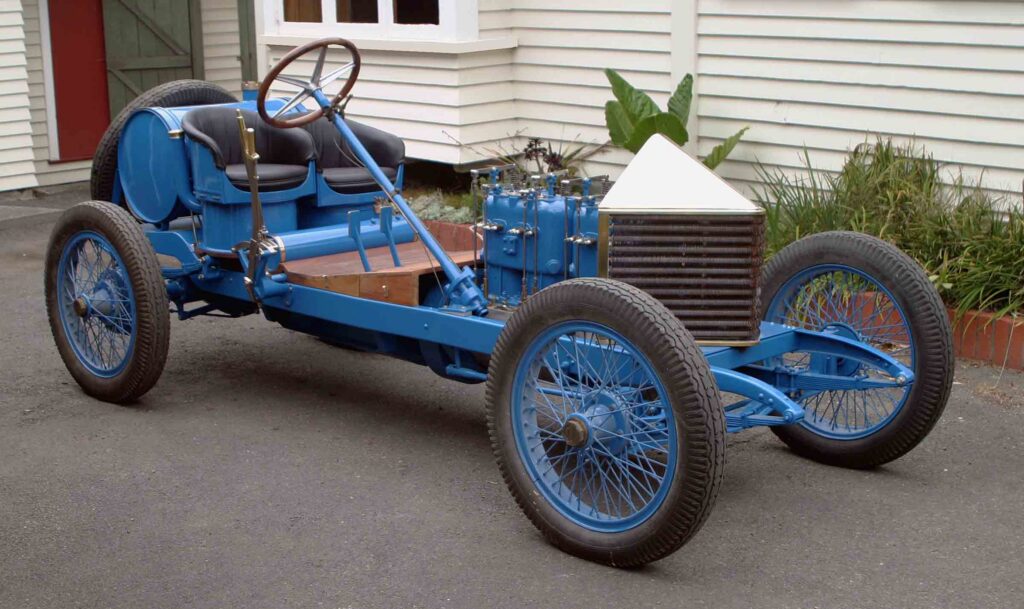
The actual Formula One
Seeing, in a shed in Hamilton, New Zealand, the Darracq 120 racer that Louis Wagner, also a pioneer aviator, drove to victory in the 1906 Vanderbilt Cup race felt a little like finding a Rembrandt at a garage sale.
For historical significance, I’d say this car ranks with Ray Harroun’s Marmon Wasp, the first Indianapolis 500 winner. Unlike Harroun’s Wasp, which has been lovingly cared for at the Indianapolis Motor Speedway Hall of Fame Museum over the years, this historically pivotal machine wound up half a world away from its home in France and, to most of the motoring world, largely forgotten. Sadly, so is the story of how the car got to Aotearoa in the first place.
More often than not, a racing car that is a few years old is regarded as obsolete and relegated to a shed somewhere. As far as racing drivers and team owners at the cutting edge of the sport are concerned, the cars are virtually worthless at that point. They can’t be driven on the street; at best they can be reconfigured for lower levels of the sport, so few people care about them until their historical significance becomes more apparent.
Motorsport Flashback: The Temple of Speed
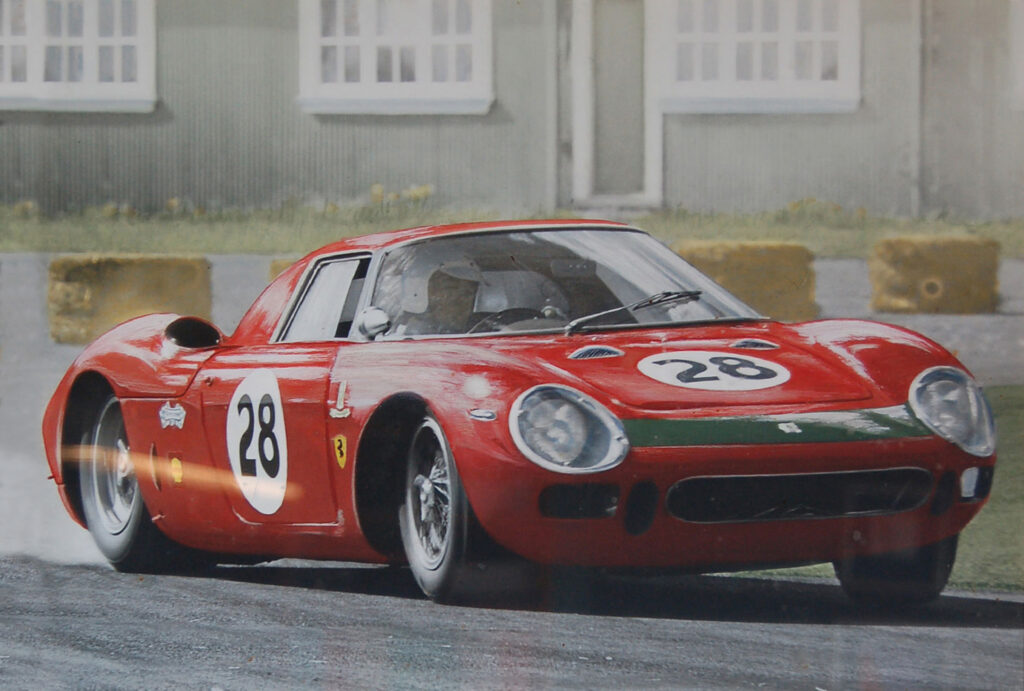
On the banks of the Lambro River is Europe’s largest enclosed park, all 688 hectares of it. Parco di Monza was commissioned by the son of an Austrian empress as a summer retreat in the late 1700s, but it would be for another century and a half before ground was broken on what would become Italy’s famous theatre of speed at the park’s northern end. One hundred years ago on 3 September, less than four months after work started, Autodromo Nazionale di Monza was officially opened and the first race – appropriately, the Italian Grand Prix – was run a week later. Monza was the world’s third purpose-built circuit, after Brooklands and Indianapolis, and was the result of the Milan Automobile Club financing the 3500 workers who created the super-quick, and consequently dangerous, track that made the word ‘Monza’ synonymous for speed.
The butterfly effect
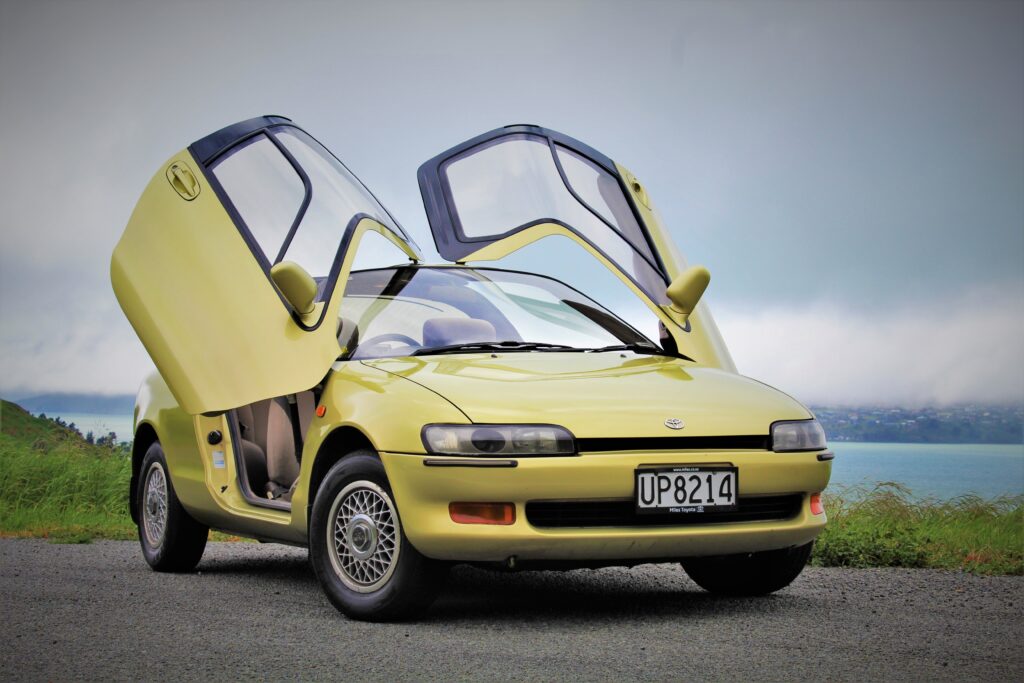
The man on the mountain bike pedalled over, taking it all in. Gazing in wonderment at this small Japanese coupe with butterfly doors, he said, “Wow, I have never seen one of these before. What is it?” When I told him it was a Toyota, he nearly fell off his bike.
The Toyota Sera is unique amongst ’90s Japanese coupes. The Sera, which is Italian for ‘evening’, can trace its roots back to Toyota’s AXV-II concept car. Launched as part of a trio of Toyota concept cars at the 1987 Tokyo Motor Show, it shared its underpinnings with the P70 Toyota Starlet. The similarities ended there, thanks to the AXV-II’s low-slung and rounded coupe styling with butterfly doors. These doors were held upright by gas struts when fully open. Glass covered the upper section of the doors and the rear hatchback.
These features, much to everyone’s surprise, were carried over to the production Sera in 1990. Toyota marketed the Sera, which means ‘will be’ in Spanish and ‘princess’ in Hebrew, as a funky alternative to the much-loved MR2.
The other Q car
Say the word ‘bond’ to anyone in the street and around 80 per cent straight away think of pop culture’s least-secret secret agent. The other 20 per cent may think of the wad of cash required to secure a flat or hire equipment that one gets back providing the fixtures and fittings stay much as they were.
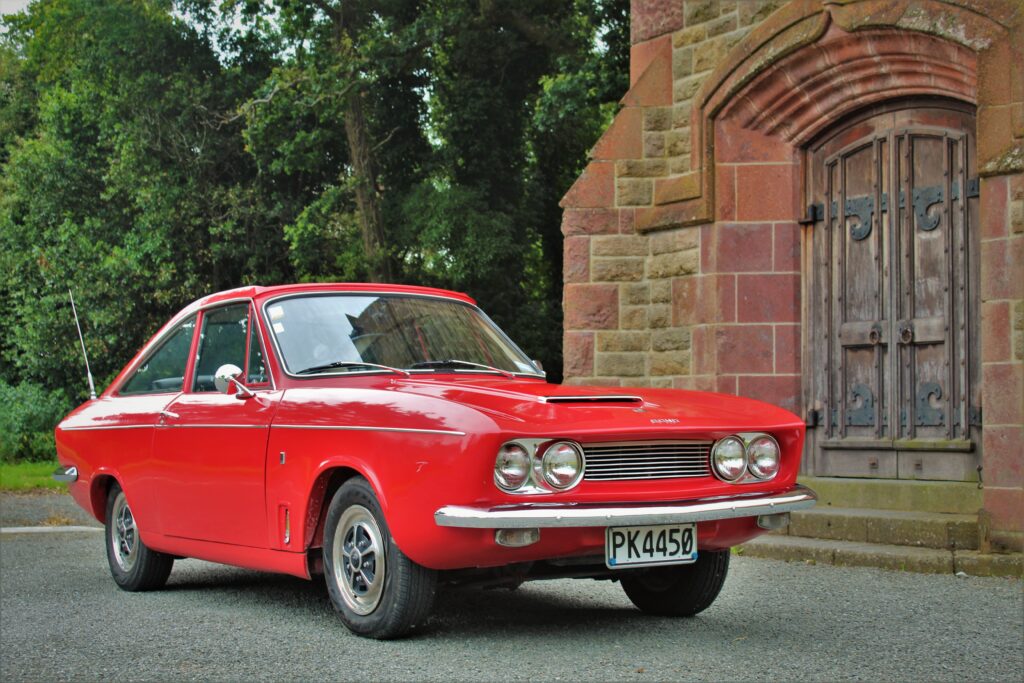
However, mention ‘bond’ in specialist classic car circles and people will spin a very different yarn. If you dig deep enough, you will find an eccentric British carmaker that, throughout its 23 years in business, spawned some quirky and charming little cars.
The company was founded by Paul Sharp in 1922 under the name of Sharp’s Commercials Limited. However, the company did not start producing cars until 1948. The first car to carry the Bond name was the Bond Minicar. A three-wheeled, soft-top, two-cylinder eco car, the Minicar was a big hit at the time as the desire for an economical urban runabout that didn’t attract four-wheel car tax was strong in post-war Britain. All in all, 34,285 Minicars were produced over 26 years in a variety of variants.
Last Tango in the Fast Lane
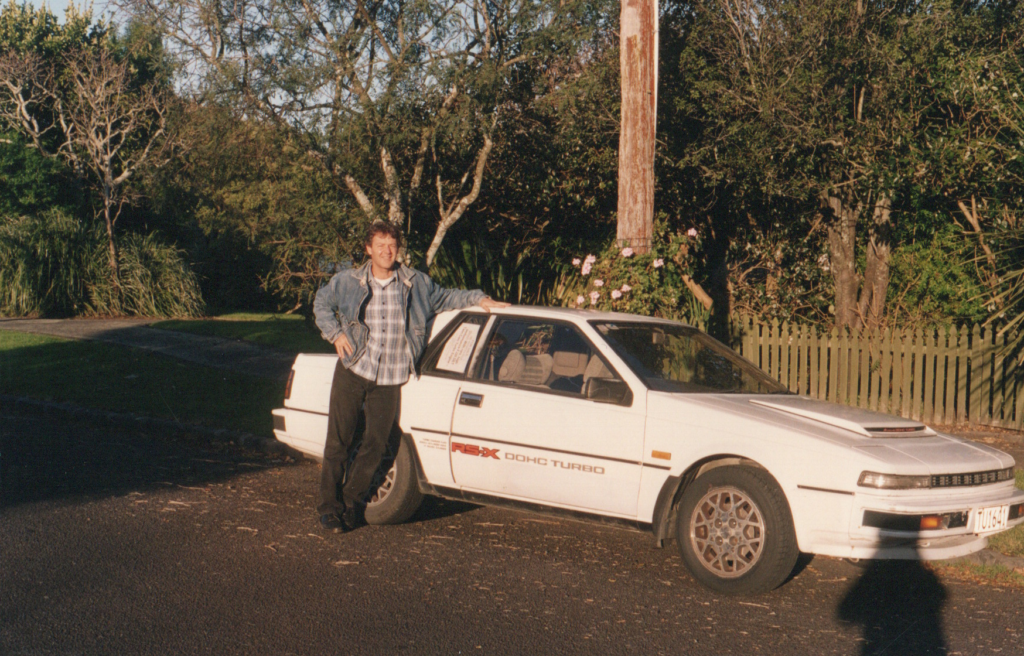
In the mid ’80s, I locked into a serious Nissan/Datsun performance obsession. It could have kicked off with my ’82 Datsun Sunny, though this would have been a bit of a stretch of the imagination, given its normally aspirated 1.2-litre motor — not the sort of thing to unleash radical road warrior dreams. But it did plant a seed, and it was a sweet little machine and surprisingly quick, in contrast to all the diabolical English offerings I had endured.
I was living in South Auckland at the time and was an unrepentant petrolhead. Motor racing was my drug of choice, and I followed the scene slavishly. Saloon car racing, with the arrival of the international Group A formula, was having a serious renaissance here and in Australia and Europe. There was suddenly an exotic air in local racing that had been absent for 15 years.
I was transfixed by this new frontier of motor racing that had hit our tracks in 1985–87 and the new array of machinery on display. In 1986, the Nissan Skyline RS DR30 made a blinding impression on me. The Australian Fred Gibson-run, Peter Jackson-sponsored team of George Fury and Glenn Seton were the fastest crew of the 1986 Australian Touring Car Championship. But Kiwi legend Robbie Francevic snuck through to win the Aussie Championship in his Volvo 240T after a strong start and consistent finishes.
A passion for classics and customs
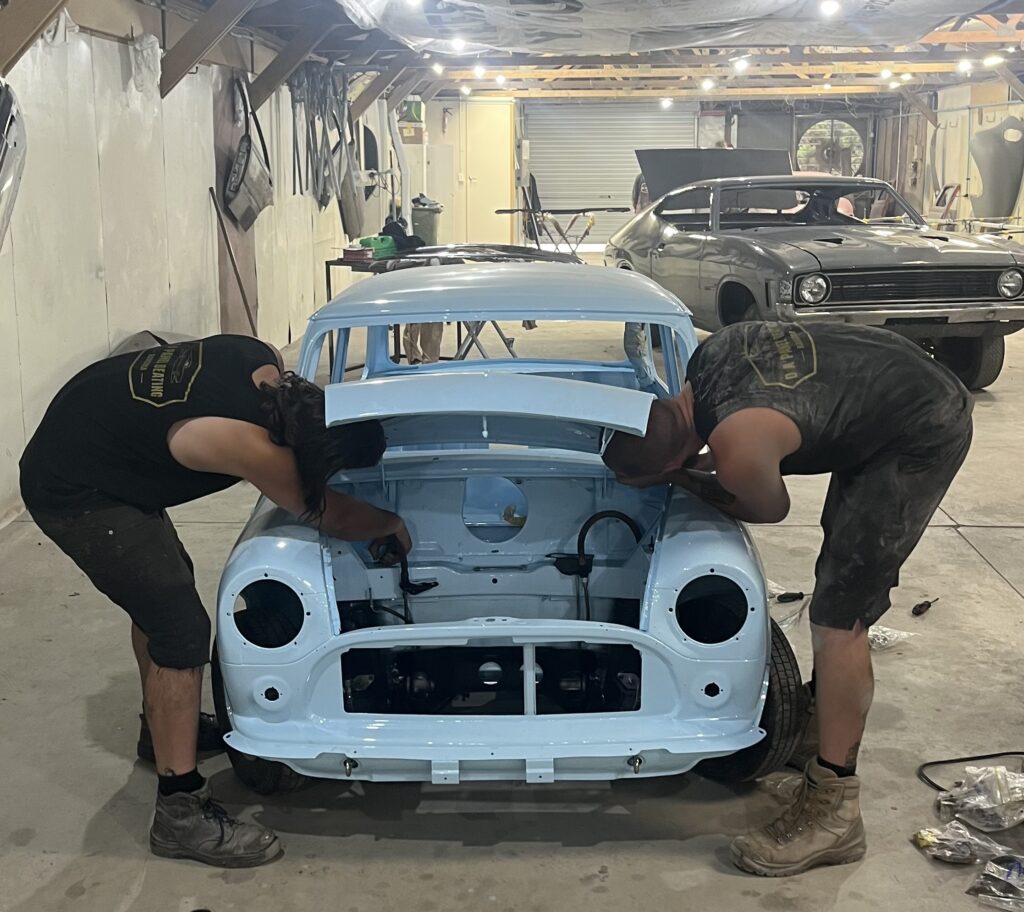
In the highly competitive field of New Zealand classic and custom restorations, reputations are won or lost on the ability to maintain consistently high standards of workmanship. A company managing to achieve this is D A Panel beating Ltd, of Rangiora near Christchurch. Is your classic or custom car restoration stalled, or in need of a refresh, or perhaps you are looking for experts to rebuild that recent import project out of Europe or the ‘States?
Coaching from the bench: Casting plastic knobs and rubber parts
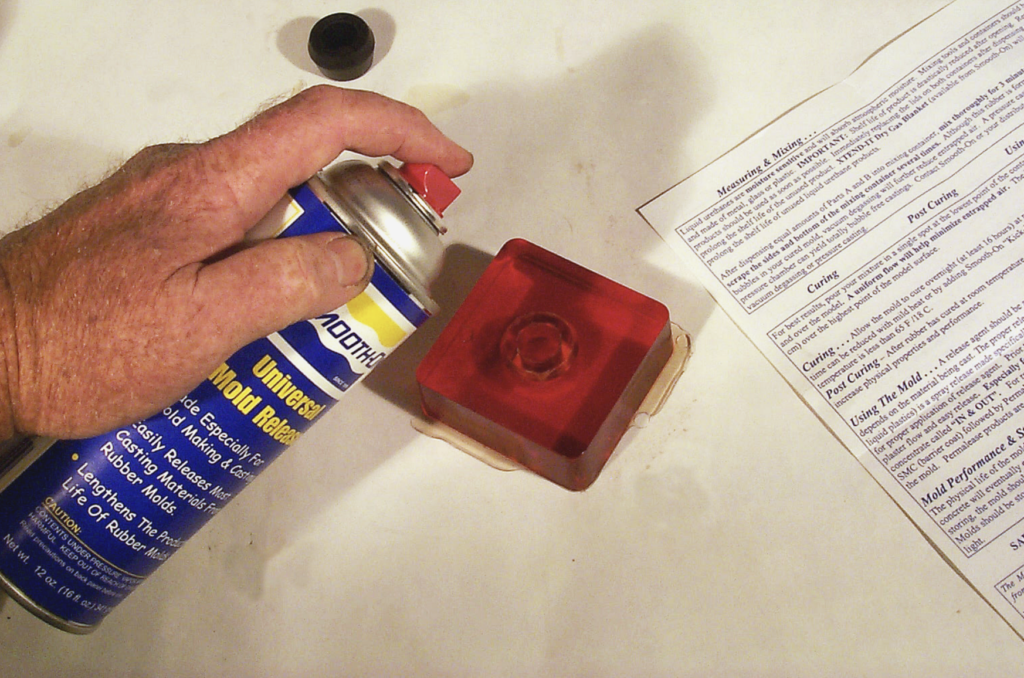
Casting rubber items is simple if you have a good original to work with. The item doesn’t have to be perfect. You can use plasticine to smooth out cracks, and you can even make whole prototypes out of low-fire modelling clay available from craft stores if you need to. Prototypes can also be made of wood or metal.
You will need mould dams to contain the liquid urethane moulding solution until it cures. You can build boxes out of strips of wood, but I have found that small plastic boxes and bowls such as those you would use for leftovers in your fridge work well if you spray them with a mould release agent.
Temperature is important to the chemical processes involved, so work in an area that can be maintained at around 20 degrees. You will also need adequate ventilation because the fumes can be dangerous to breathe. And you will want to wear latex gloves to protect your hands.
1975 Suzuki RE5
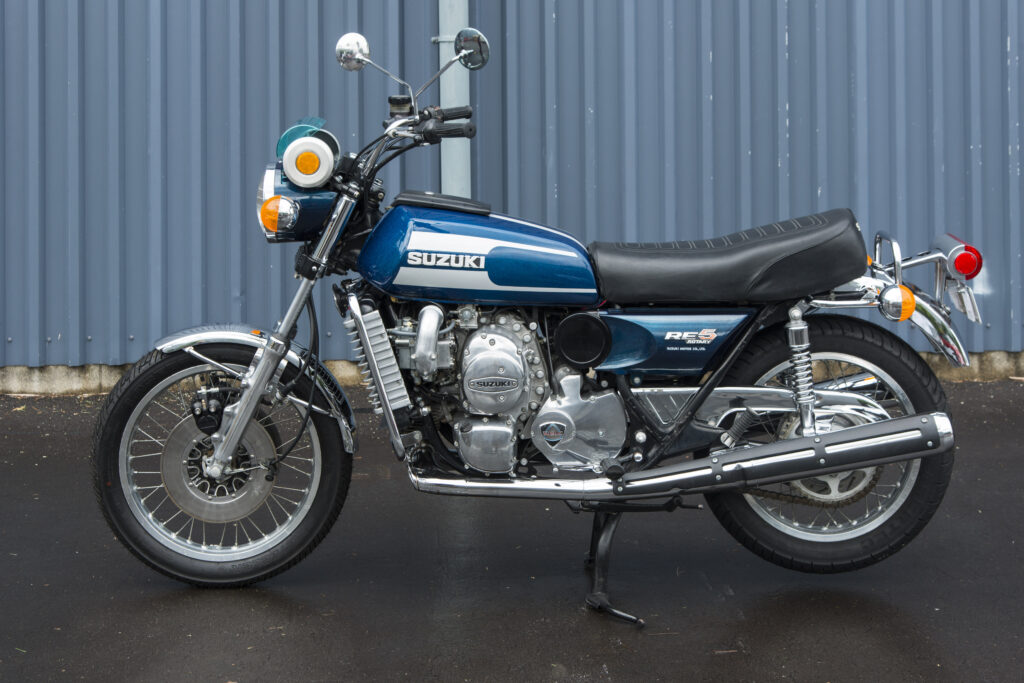
Suzuki had high hopes for its RE5 Wankel-engined bike launched in 1975. It had started looking at the Wankel engine in the mid-60s and bought the licence to the concept in 1970.
Apparently all of the big four Japanese makers experimented with the design, Yamaha even showing a rotary-engined bike at a motor show in 1972. But Suzuki was the only one of the big four to go into production. Like many others at the time, Suzuki believed that the light, compact, free-revving Wankel design would consign piston engines — with their complex, multiple, whirring valves and pistons, which (can you believe it?) had to reverse direction all the time — to history.
Picking over the past – 1940 Ford V8 ½-Ton Pickup
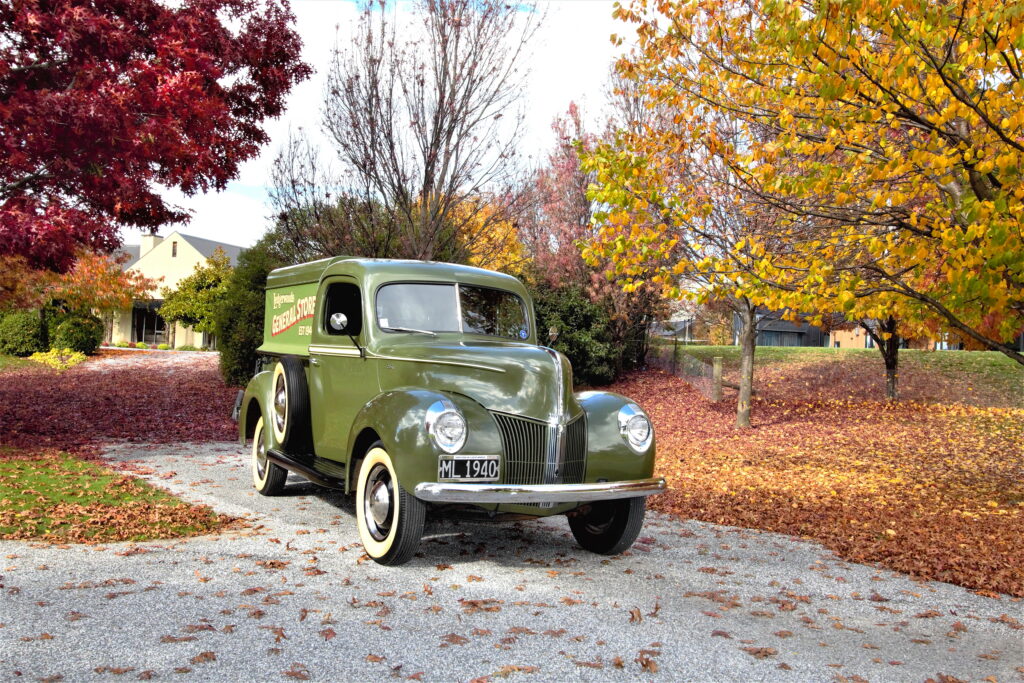
Jim and Daphne Ledgerwood have been around Fords most of their lives. They love their Ford coupés and two door hardtops, while also making room for an occasional Chevrolet. Their Wanaka based ‘Originals’ collection, featured in New Zealand Classic Car’s July 2022 issue is headed by an outstanding time-warp black 1940 Ford Coupé, its original factory assembly markings and documents offering something of a nostalgia trip.
Jim’s early days in hotrodding in Dunedin were spent building up a number of early Ford pickups and he became a prolific builder of modified pickups.
“I had lots of early Ford V8s in those days and once I had finished them I often sold them on. I would run out of garage space. I had up to a dozen restored Fords at most times then.”